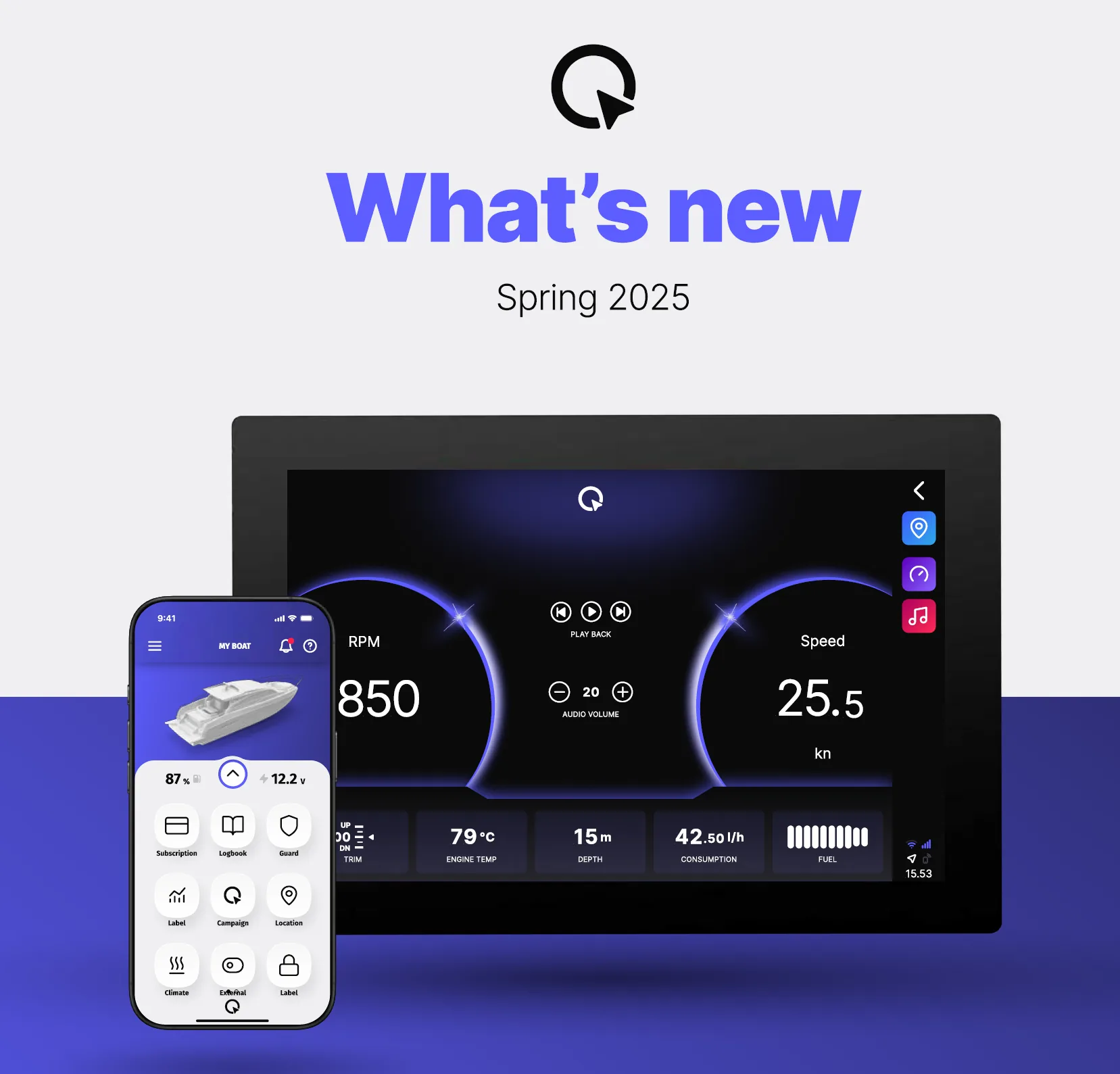


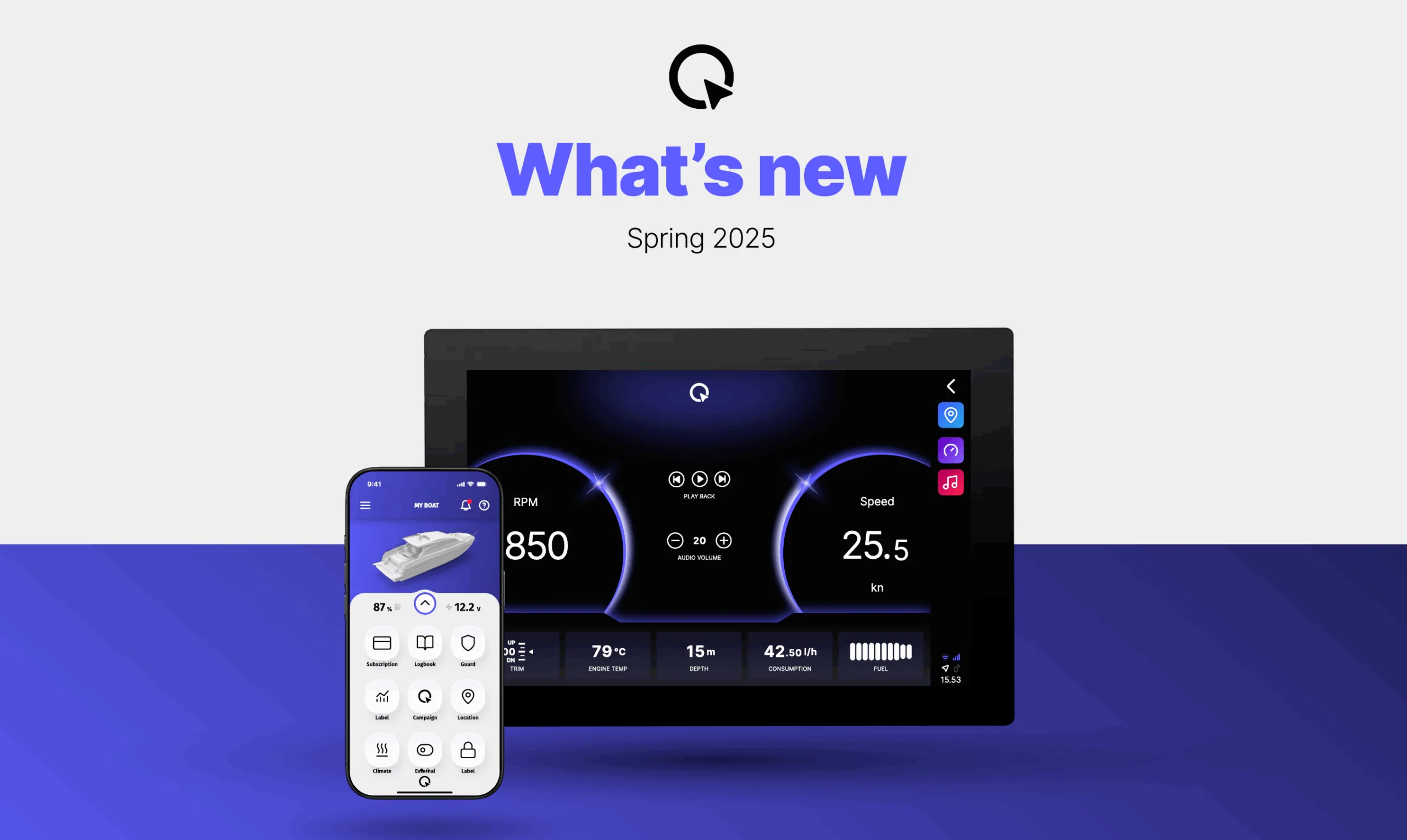
Q plotters (previously known as The Q Experience) have received a new software update that promises to revolutionise the way you navigate with your leisure boat. This all-in-one platform integrates GPS, sonar, remote monitoring, AIS via the internet, a WiFi hotspot and a media player into a single touchscreen device. Below, we explain in detail the key benefits of this update and how it can improve the onboard experience on any type of boat, from speedboats to cruisers, including popular Parker boats.
Ease of use and an intuitive interface
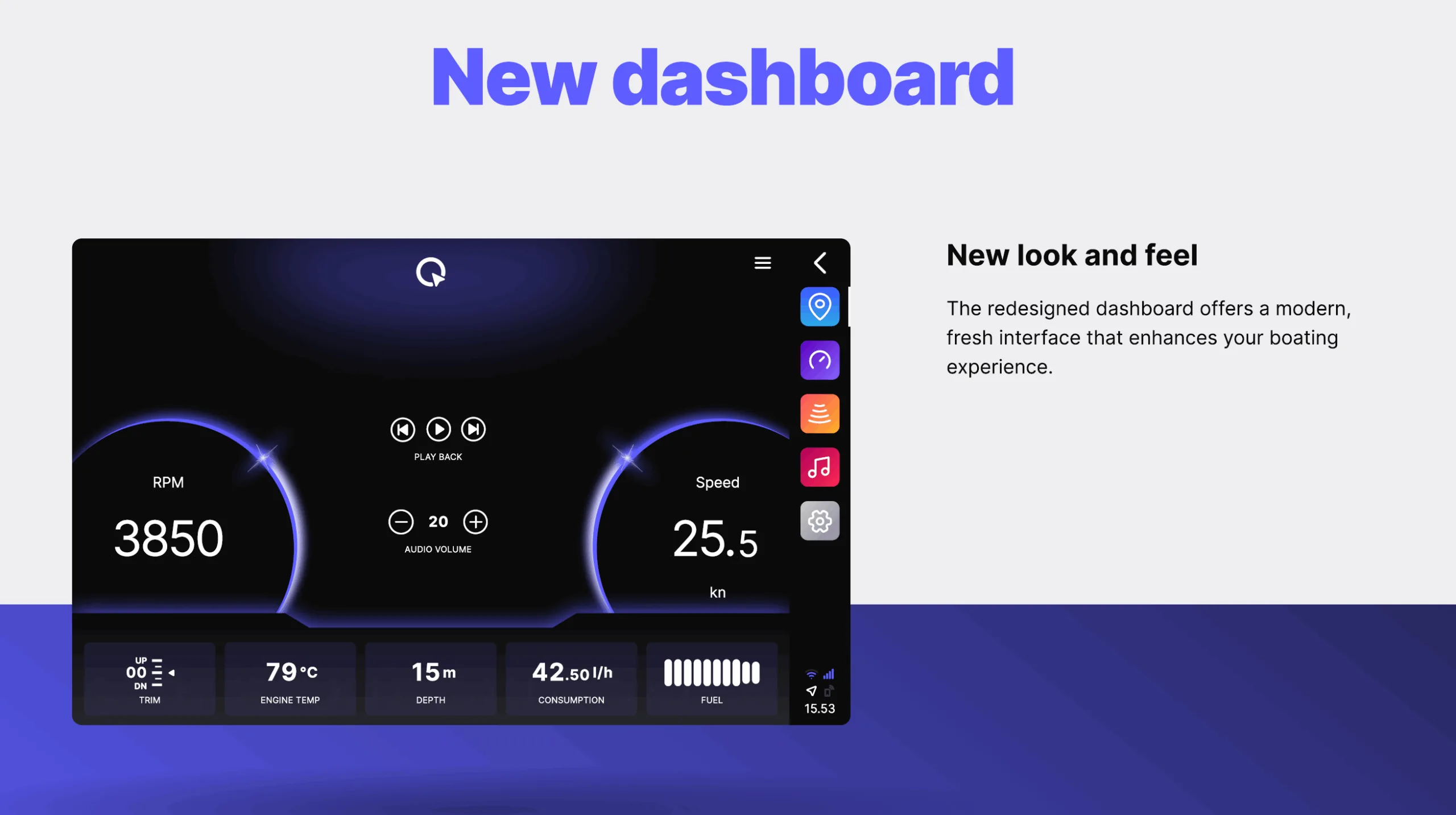
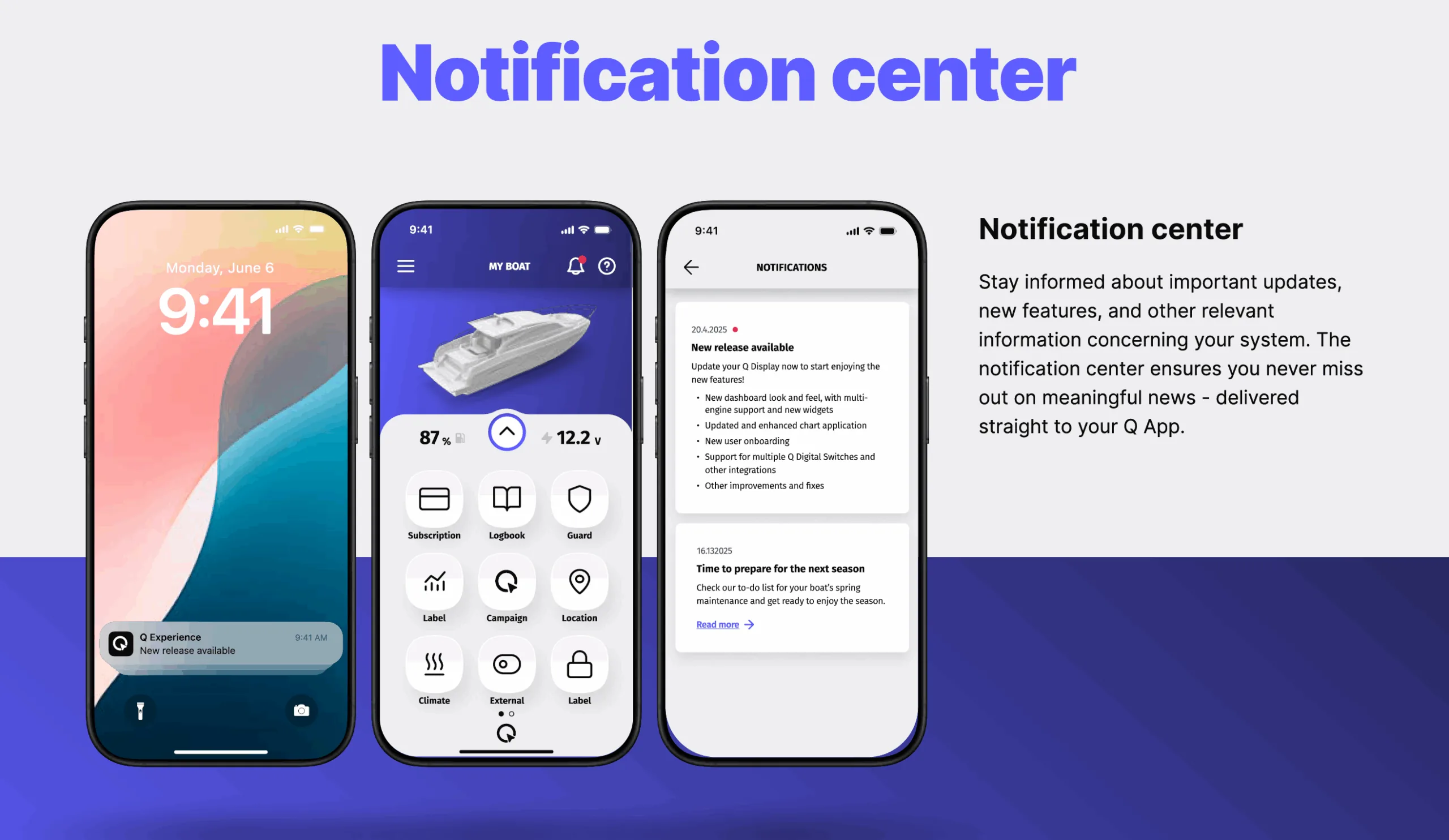
The revamped interface of the new Q plotter displays a main dashboard with clear digital instruments (RPM, speed, etc.) and redesigned side menus. The update introduces a “New dashboard” with a modern, clean design that makes it easier to read data and navigate features. Thanks to this refresh, the interface is more intuitive than ever: the side app icons have a refreshed look and are easy to recognise. In addition, an initial setup assistant has been added for new users, guiding them step by step through language selection, engine parameters, draft, fuel capacity and pairing with the mobile app, ensuring a simple start-up even for beginner boaters.
Full integration of functions in a single device
One of the biggest attractions of Q plotters is the integration of multiple marine functions in a single device. This update reinforces that advantage: Q combines GPS chart navigation, CHIRP sonar/fishfinder functions, remote boat monitoring (bilge, battery, intrusion alarms, etc.), reception of AIS data over the internet and even serves as an onboard entertainment hub (FM radio and Bluetooth music playback with self-amplified audio output). Everything is controlled from the console touchscreen, with a unified interface. For example, the built-in 4G connectivity allows the system to receive real-time AIS information to display other vessels on the nautical chart, improving navigation safety. The sonar side has also been enhanced: Q plotters now support high-definition Airmar CHIRP transducers that, simply by connecting them, deliver crisp seabed detail and clear fishing targets, both in transom-mount and through-hull installations. Even additional systems such as radar can be integrated (on compatible models), making the Q plotter truly the central hub of the boat’s electronics. In short, with Q you have everything in one – fewer devices at the helm and more centralised control for smart, simplified navigation.
Digital Switching and advanced onboard control
Another major advancement in the new version is its improved compatibility with Digital Switching, the technology that allows you to digitally control the boat’s electrical systems (lights, pumps, trim tabs, etc.) from the screen. This update adds support for multiple Q Digital Switch modules connected to a single Q display, so more electrical equipment can be managed according to the needs of each boat. It is even possible to integrate traditional physical switch panels that act as an extension of the digital system, offering flexibility for those who want classic buttons alongside touchscreen control. Boat manufacturers such as Parker already take advantage of this feature to customise the Q interface on their models, incorporating their own screens and bespoke digital controls for each type of boat. The result? Total control of the boat: you can operate or monitor virtually any system (from lighting to battery status) directly on the plotter, with the convenience of automations and alerts. This Digital Switching integration simplifies the helm panel and takes marine automation to the next level, making your boat smarter and more efficient.
Improved navigation and nautical charts
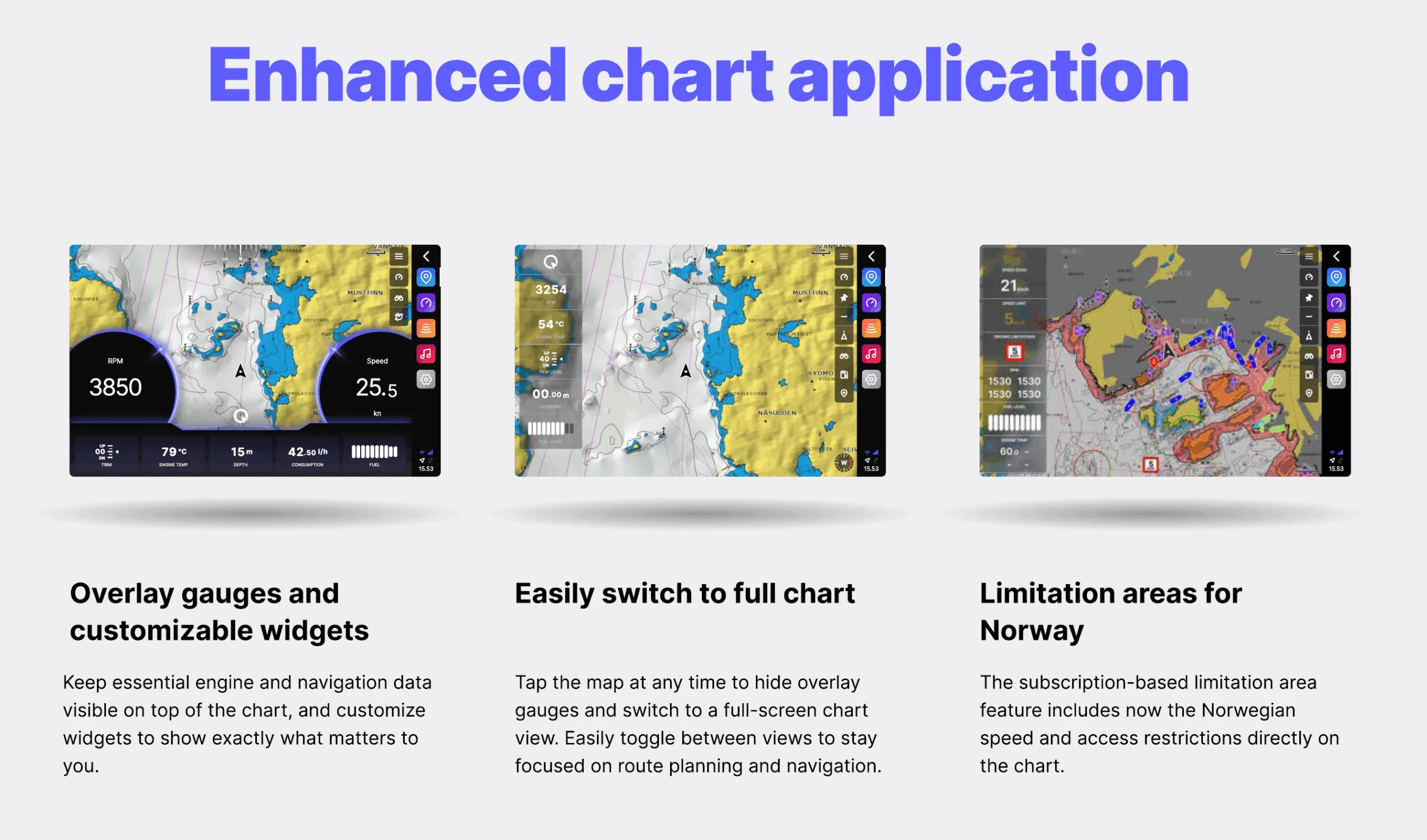
The nautical chart app within the Q ecosystem has also received significant improvements. On the one hand, new display options have been added: you can now easily switch between Head-Up mode (oriented to the boat’s heading) and North-Up (oriented to north) depending on your preferred on-screen reference. A mini compass has also been included on the chart, indicating north with a red triangle and the boat’s current heading with a letter, helping with quick at-a-glance orientation.
Another new feature is the ability to hide overlay indicators (such as engine gauges or numeric data) to enjoy the chart in full screen; this way, you can lock the expanded chart view and navigate using only the map when you need maximum clarity. Alarms have also been adjusted: anchor alarms and other notifications are managed better to avoid false alarms, providing more reliable information. The AIS system also sees improvements in target tracking and handling on the screen, offering more accurate tracking of nearby vessels. Weather data has even been integrated: for example, the plotter can now display wind scale bars thanks to integration with the Windy service, allowing you to check wind conditions visually directly on the chart.
Finally, it is worth noting that in some regions local details have been added, such as speed and navigation restriction zones in Norway, visible when subscribing to that service. All these improvements in electronic navigation make route planning and safety at sea even greater.
Conclusion: a step forward in smart navigation
The latest update for Q plotters brings simplicity, integration and personalisation to leisure boating. With a more intuitive interface, unified functions and improved connectivity, this platform turns any vessel into a smart boat, where everything is under control from a single screen. If you already have a Q system, we recommend updating it as soon as possible to start enjoying these new features – remember that older versions must be updated before the end of May 2025 to continue enjoying all online functionality. And if you are not yet familiar with this technology, at Nautic Luis we can advise you on how Q plotters would fit your boat to elevate your boating experience. In short, Q continues to live up to its slogan “Smart Boating. Simplified.”: smart boating, simplified, and now more complete than ever with this new update.
You can find out more information by downloading the PDF by clicking here