

Winter is one of the most crucial periods for boat care. Although nautical activity decreases and many boats remain moored or out of the water, these months of reduced use offer an opportunity to perform maintenance tasks, prevent breakdowns, and ensure everything is prepared for the next season.
In the Mediterranean, where temperatures are usually moderate, it is common to think that a vessel does not need much attention during winter. However, humidity, salt spray, storms, and long periods of inactivity can affect engines, electrical systems, the hull, and various other boat components.
Good winter maintenance is not just about protecting a vessel during the cold months, but about preserving its performance, extending its lifespan, and avoiding unnecessary repairs.
1. The Engine: Prevent Today to Cruise Peacefully Tomorrow
The engine is one of the most important elements of any vessel and also one of the most susceptible to damage during prolonged periods of inactivity.
When a boat remains unused for several months, certain mechanical components can be affected by corrosion, lubricant degradation, or fuel deterioration.
Therefore, preventive maintenance should include checking the levels and condition of oils, filters, the cooling system, and transmission components. It is also important to check the condition of sacrificial anodes, which protect certain metal parts against galvanic corrosion.
Depending on the engine and storage conditions, it may also be necessary to prepare the cooling circuit against possible frosts and adopt specific preservation measures.
Each engine type requires different procedures. For this reason, following the manufacturer’s instructions and consulting specialized professionals is essential to ensure proper engine preparation during winter.
2. Humidity and Salt Spray: Two Silent Enemies
Constant exposure to the marine environment is one of the main factors of wear and tear for any vessel, even when it is not sailing.
During winter, the combination of humidity, condensation, and lack of ventilation can promote the appearance of mold, unpleasant odors, and corrosion in certain components.
Interiors deserve special attention. Upholstery, wooden elements, storage compartments, and electronic systems can deteriorate if they remain for months in humid and poorly ventilated environments.
Thorough cleaning, adequate ventilation, and the use of protection systems adapted to each boat help preserve materials and maintain finishes in good condition.
Especially in high-end recreational vessels, where material quality and attention to detail are essential to the onboard experience, these tasks contribute to preserving both the comfort and the value of the boat.
3. The Hull and Underwater Hull: A Fundamental Review
Winter is also a good time to examine the parts of the vessel that usually remain submerged.
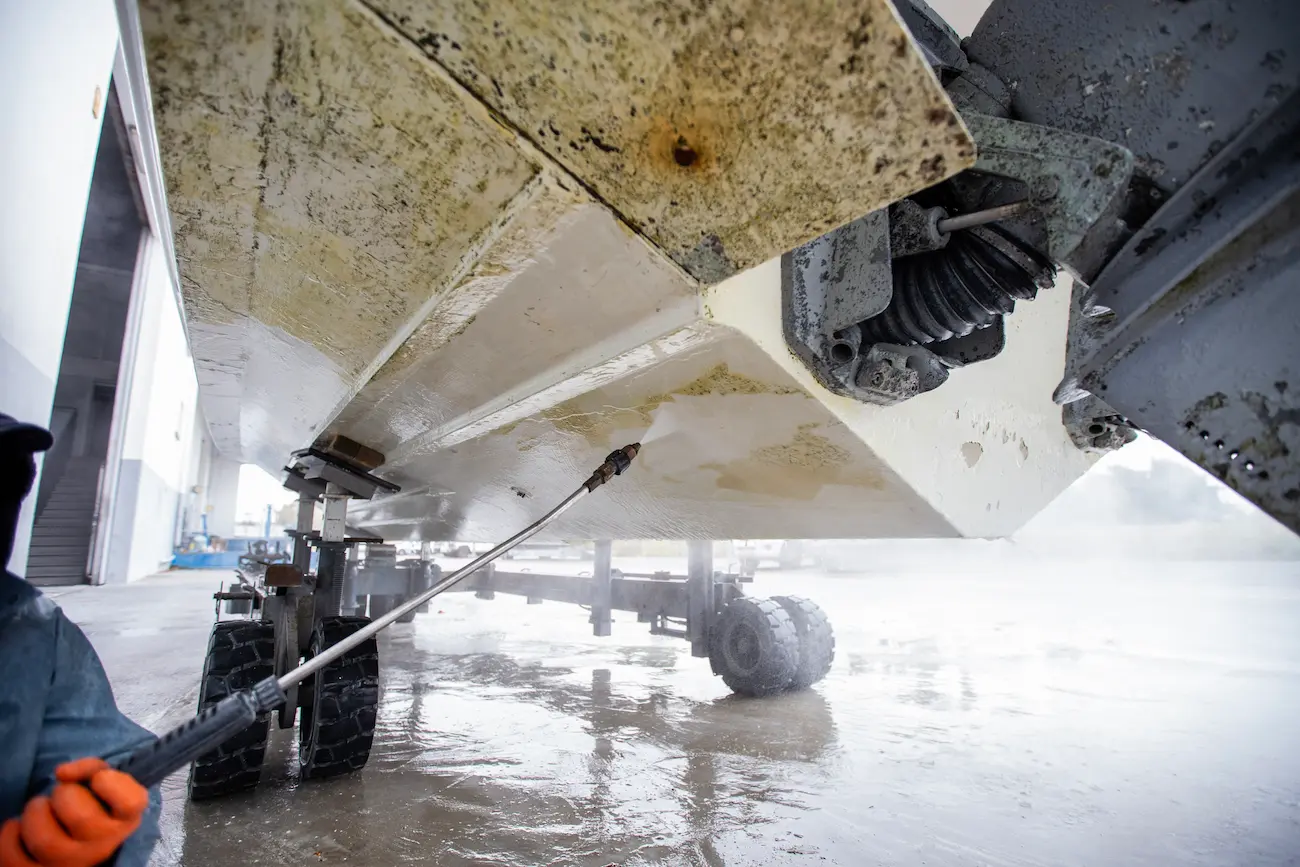
The underwater hull, which is the surface of the hull below the waterline, is constantly exposed to the accumulation of marine organisms, fouling, and other elements that can affect its performance.
Taking advantage of the inactive period to clean the hull and check the condition of the antifouling treatment allows the vessel to be prepared for its next launch.
Furthermore, an out-of-water inspection facilitates the examination of propellers, shafts, stern drives, rudders, anodes, and other elements that may show signs of wear.
A hull in good condition not only helps maintain navigation performance but can also improve the vessel’s efficiency and reduce fuel consumption.
4. Batteries, Electrical Systems, and Water Circuits
Electrical systems also require attention during periods of inactivity.
Batteries can progressively lose charge if left unused, potentially leading to a reduction in their capacity or lifespan. Therefore, it is advisable to check their condition and establish a suitable charge maintenance system for their technology and the boat’s needs.
Similarly, it is important to check electrical connections and verify the operation of bilge pumps, especially when the vessel remains moored. In these cases, the necessary power for safety systems must be maintained.
Freshwater circuits, tanks, and sanitation systems also need proper preparation when the boat will remain unused for several months, especially if there is a risk of sub-zero temperatures.
Small checks, performed in time, can prevent significant problems when resuming activity.
5. Protecting the Vessel from Storms
Winter in the Mediterranean can also bring episodes of intense wind, rain, and sea storms.
In areas like the Costa Brava, where the Tramontana wind can reach considerable intensity, it is especially important to check the protection and mooring elements of vessels that remain moored.
Reviewing fenders, mooring lines, protective covers, and drainage systems helps minimize risks arising from weather conditions.
When the boat remains out of the water, proper storage also helps reduce its exposure to external agents.
For this reason, winterization of vessels in specialized facilities is an alternative for owners who wish to protect their boat during months of lower activity.
We Care for Your Vessel All Year Round
At Nautic Luis, we have extensive experience in the maintenance, repair, and winterization of recreational vessels.
From our facilities in Empuriabrava, we offer a comprehensive service that includes mechanical maintenance, system review, repair work, and vessel preservation during periods of inactivity.
As an official service provider for Volvo Penta, Mercury, and Suzuki Marine, we possess the technical knowledge and resources necessary to handle different types of engines and adapt each intervention to the specific needs of each boat.
Our goal is for each vessel to maintain its performance, safety, and reliability, season after season.
Because we know that when it’s time to return to the sea, what truly matters is being able to enjoy every mile with absolute peace of mind.