

Is there anything better than enjoying our coasts with the breeze on your face and the sound of the sea? Yes, doing it with your best friend. In Spain, where there are more than 9 million registered dogs, it is not surprising that more and more owners are deciding not to leave their pet on land and make it another crew member.
However, changing the sofa at home for the bathtub of a boat or yacht requires preparation. Unlike a sailboat, where heel is the main enemy, on a motorboat we must pay attention to speed, engine noise, and the sun.
At Nautic Luis, we want your experience to be safe and pleasant. We have prepared this definitive guide that combines legal aspects, technical safety, and coexistence tips for sailing in Spanish waters.
1. Do you have a true “Sea Dog?”
Before setting sail, it is important to assess your companion’s fitness. Although any dog can enjoy the sea with the appropriate adaptation, the ideal “sea dog” is usually quick to learn, has a balanced character, and is of a manageable size for the reduced spaces of a cabin or deck.
Some breeds have a genetic advantage for nautical life:
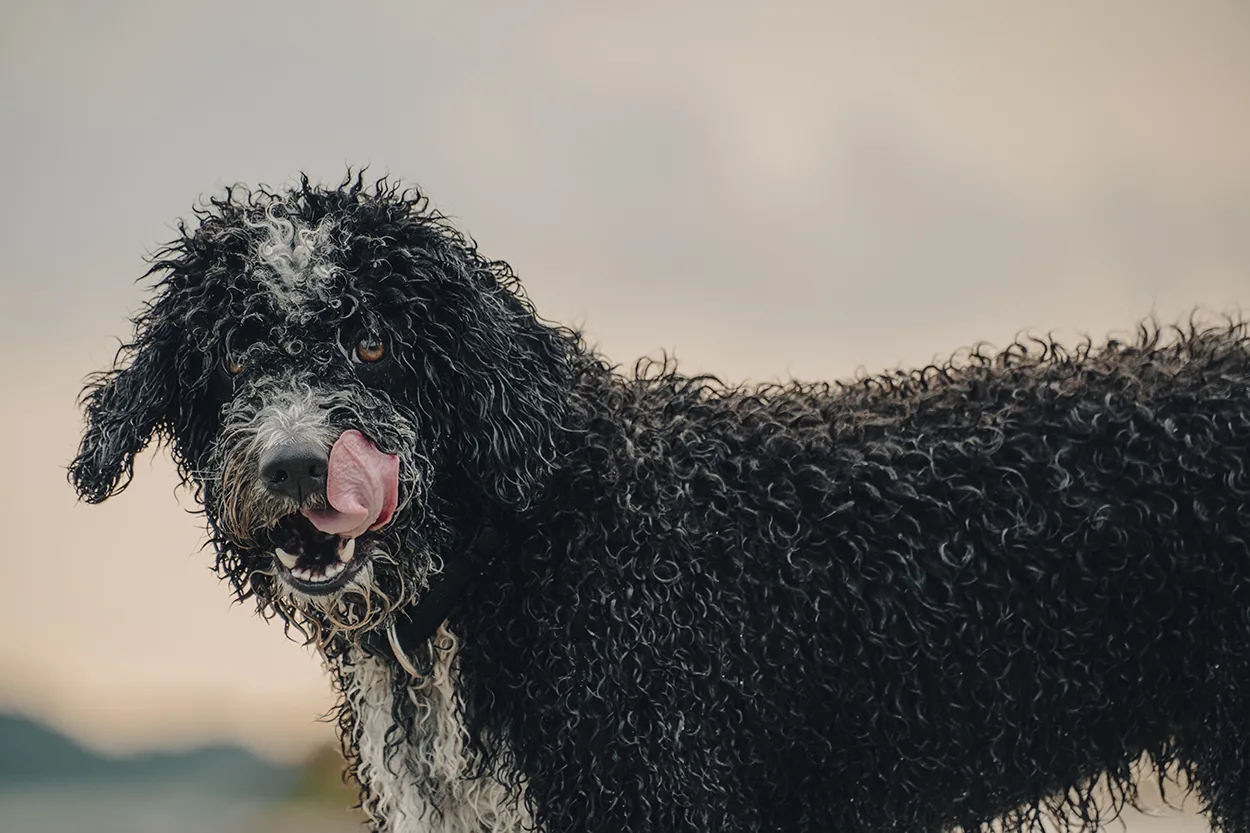
- Cantabrian Water Dog: The quintessential sailor from northern Spain. Historically, they lived on fishing boats, cleaning decks and carrying ropes. Their waterproof coat and instinct make them unsurpassed.
- Labrador Retriever: Originally bred to recover nets, they are powerful swimmers and very emotionally stable.
- Portuguese Water Dog: Agile, playful, and unafraid of a dip, ideal for active families.
2. Documentation and Legality in Spain
To legally navigate the Spanish and European coast, bureaucracy is the first indispensable step. Your dog must be a documented traveler:
• European Passport: Essential. It must be issued by an authorized veterinarian and reflect the medical history.
• Microchip: Mandatory to identify the animal in case of loss or accident.
• Rabies Vaccine: Must be up to date. Key fact: If it is the first time you are giving it before the summer, remember that the vaccine is only valid 21 days after its administration.
3. The “Legal Vacuum”: Why you are their only lifeline
This is a critical point that many owners are unaware of. Although your insurance allows pets, the reality of Maritime Law (such as the Athens Convention) is harsh: in case of emergency or rescue, animals are usually legally considered as “merchandise” or “luggage”, not as passengers.
This means that there are no official rescue protocols for pets in case of shipwreck, nor are they assigned a place in life rafts. The responsibility for their safety lies exclusively with you. Therefore, the equipment is not a whim, it is a vital necessity.
4. Specific Safety on Motor Boats
Motor boats have open swim platforms and reach speeds that can destabilize an animal.
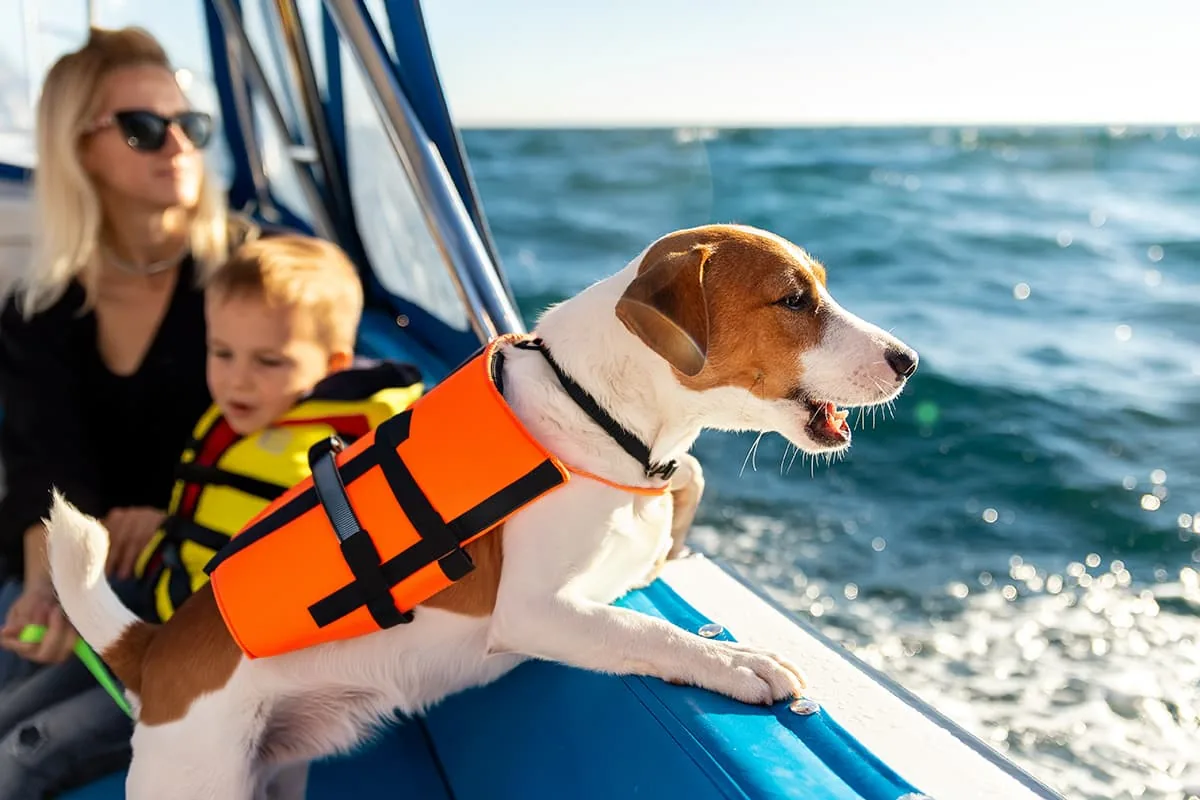
The Life Jacket: Not optional
Even if your dog is an Olympic swimmer, the open sea is not a swimming pool. A good vest fulfills three functions:
- Buoyancy: So that it does not get exhausted swimming.
- Visibility: Bright colors to see it among the waves.
- Rescue: Look for one with a resistant dorsal handle. It is the only safe way to hoist the dog back on board, especially if the swim platform is high.
Protocol “Dog Overboard”
On a motor boat, the noise can prevent you from hearing a fall. If it happens, follow this golden rule: Never jump into the water after him, you could put yourself in danger too.
- Shout “Man overboard”: Assign someone who does not take their eyes off him for a second.
- Neutral: The captain must stop the propeller immediately.
- Approach: Maneuver to get closer from leeward (let the wind push you towards him, not on top of him).
- Recovery: Use a boat hook to hook the vest handle from the swim platform.
5. Comfort on Board: Combating Heat and Dizziness
In a boat, the sun hits hard and the fiberglass or teak surfaces can burn.
- Hydration and Shade: Panting dehydrates quickly. Carry a non-spill drinker and offer fresh water constantly. Never let it drink salt water, it will cause serious gastric problems.
- Skin protection: If the dog has short hair or light skin, use canine sunscreen on the nose and ears. At the end of the day, rinse its coat with fresh water to remove salt and avoid irritation or “hot spots.”
- Dizziness (Motion Sickness): Yes, they also get dizzy. If you see excessive yawning or drooling, it is a bad sign. Consult your veterinarian for medications such as Cerenia or use ginger. Avoid large meals before starting engines.
6. The Management of “Needs”
On a motor boat, where space may be smaller than on a large sailboat, planning is key.
- The solution on board: Many sailors use a piece of artificial turf (AstroTurf) or absorbent pads in a corner of the swim platform. The expert trick is to get the dog used to using this material at home weeks before the trip.
- Cleaning: Always have bags and a bucket of water on hand to clean the area immediately.
7. Progressive Adaptation: Step by Step
If it is the first time your dog gets on your boat, do not start the engines on the first day to avoid trauma.
- Visit in port: Take it to the moored boat, let it sniff and reward its tranquility with its favorite toys.
- Engine idling: Turn on the engine so that it gets used to the noise and vibration without moving from the site.
- Short trips: Start with a short trip near the port with calm seas before embarking on a full day.
Ready to set sail?
Integrating your dog into the crew requires a little extra effort, but sharing the passion for the sea and discovering hidden coves together is priceless.
At Nautic Luis, we not only care about your boat, but about your entire crew, including the four-legged one. If you are looking for accessories to make life easier on board, gangways or need advice on which boat best suits your family (dog included), come and visit us!